HR & Finance / 02 of 04
Payment Automations
Collect payments directly from clients based on preset conditions
How it runs
Triggers
Any of four delivery conditions
Triggers — any of 4
- Milestone hit
- Stage reached
- Date arrives
- Deliverable approved
The trigger fan-in at the front is the differentiator
Step 01
Resolve customer and amount
Step 02
Charge or invoice
Parallel — 3 jobs
- Log the payment
- Notify
- Advance the pipeline
If failed
Hand to Failed Payment Systems
What it is
Payment collection triggered by events in your delivery process, meaning a milestone reached or a deliverable approved, rather than by someone running an invoicing session.
You need this if you invoice in batches on a set day, financing your clients for an average of half that period, on every job, permanently.
The working-capital cost is real money you never see itemised.
If your billing is already event-driven, payment status now sits next to the work, so nobody delivers the next milestone for an account that hasn't paid.
The actual build
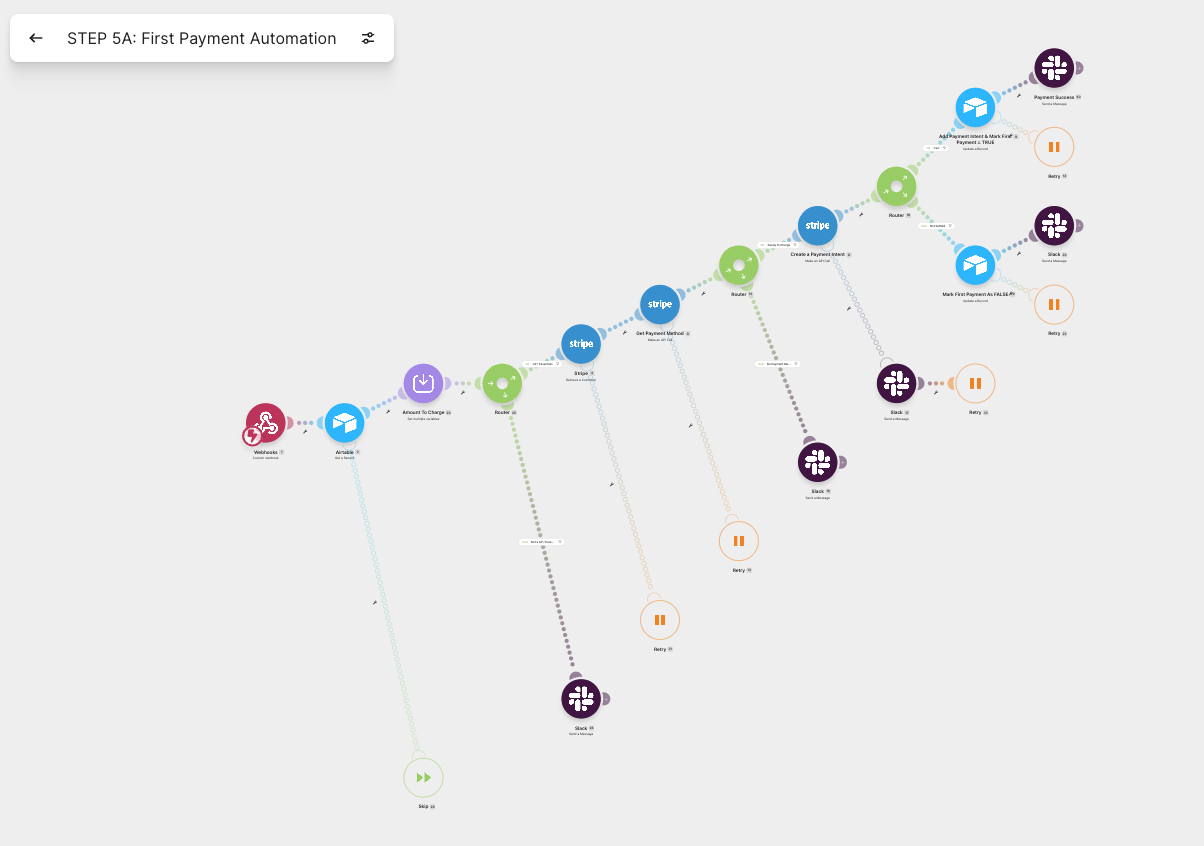
What it does for you
Money gets collected on the delivery event rather than on invoicing day, pulling cash forward on every job
Payment status sits next to the work
so you stop delivering ahead of payment without noticing.
The manual invoicing session disappears
which is usually a finance person's least valuable recurring afternoon.
Built and running
- School of Bots got Stripe subscription creation on onboarding-call booking, first-payment notifications and dispute tracking.
- Your Social Currency got multi-currency Stripe routing across UK and Dubai entities, replacing GoCardless.
- The Makenzie House got payments populating invoices, paid-clients and payments tables across both events and weddings, feeding a true receivables position.
Want this one built into your business?
Thirty minutes, no deck. We map what you run today and tell you what it would take.